Offline video transcription: why local beats the cloud
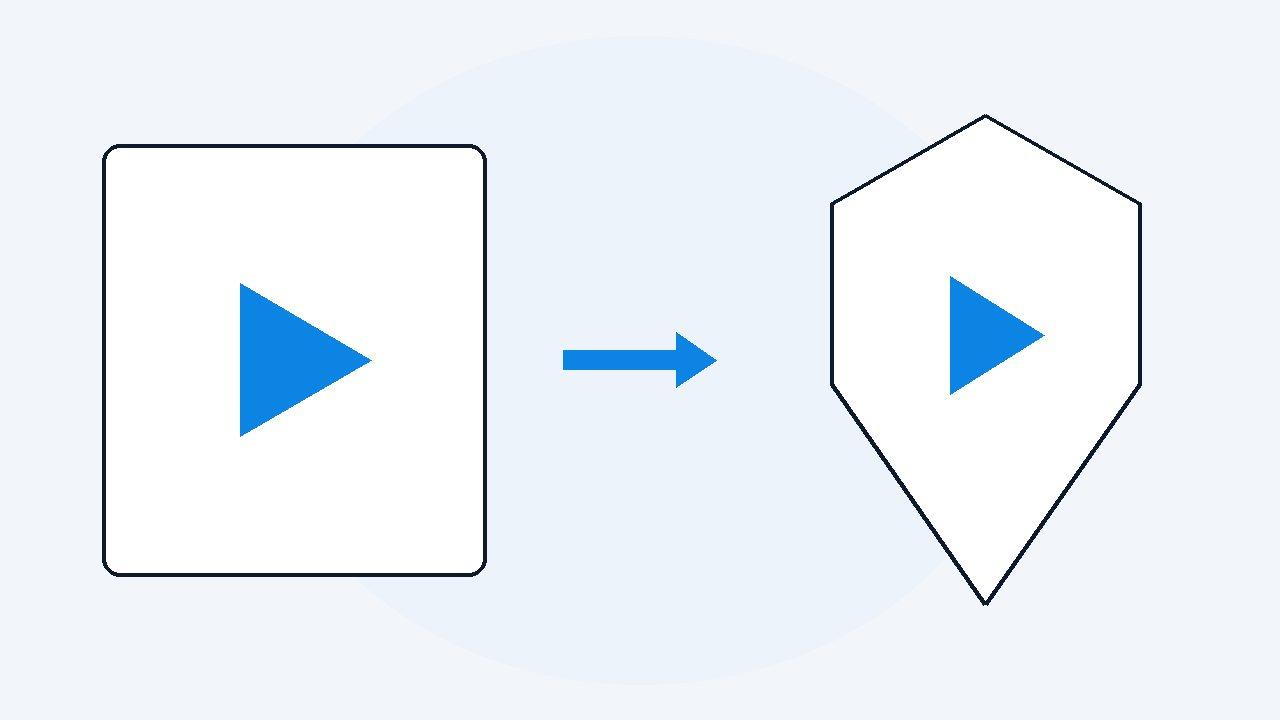
Cloud transcription means your video is copied to someone's server, processed under their retention policy, and billed per minute or per month forever. Local transcription runs the same class of AI on your own computer: nothing leaves, nothing meters, and confidential material stays confidential by architecture instead of by promise. Cloud still wins for live meetings and team collaboration, and it is fair to say so.
- Uploading a video means a copy lives on servers you do not control, under a retention policy you accepted by clicking.
- Local transcription keeps the file on your own computer, so after a one-time $19 a 3 hour lecture costs nothing extra.
- Cloud still earns its keep for live meeting notes, shared team libraries and phone-first work.
The moment that converted me was a client NDA. I had a recording I needed transcribed, freelance work with a company's internal numbers in it, and my finger was hovering over an upload button when the obvious question landed: I signed a paper promising to protect this file, and I am about to hand it to a third party whose privacy policy I have never read. That afternoon I went local, and every tool I have built since carries that decision inside it.
What "upload to transcribe" actually means
When a cloud tool takes your video, several things become true at once.
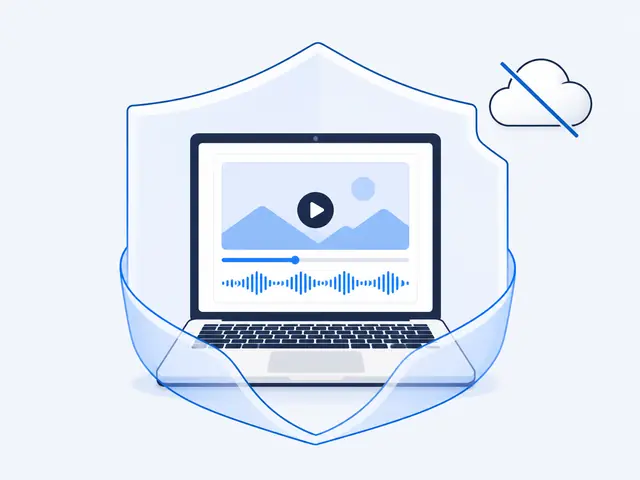
- A copy of your file exists on infrastructure you do not control.
- It sits there under a retention policy written by their lawyers, which you accepted by clicking.
- Their staff and systems can technically touch it, their breach is now your breach, and some services reserve rights to use uploads to improve their models.
Check: None of this makes cloud companies evil, most are decent, but for an NDA file, a family video or an unreleased recording, "trust us" is a weaker guarantee than "it never left".
The meter never stops being a meter
Cloud pricing is metered because their compute costs real money per minute, so heavy use gets expensive by design.
- Per minute credits, monthly tiers, annual plans.
- A student documenting a semester of lectures or an analyst turning hours of webinar recordings into documents burns through tiers quickly, and the bill repeats every month you keep the habit.
- Local flips that: your computer already exists, so after a one-time $19, a 3 hour lecture costs the same as a 3 minute clip, which is nothing.
Check: The math is boring and decisive.
Where the cloud honestly wins
If your work is one of those three, use the cloud with open eyes.
- Live meeting notes. Tools that join your calls and take notes in real time are doing a genuinely different job. VideoDoc works on recordings, not live calls.
- Team libraries. If ten people need to search the same transcript archive with shared accounts, a hosted service earns its subscription.
- Phone-first work. Browsers and desktops carry local AI well, phones are still catching up.
Check: The VideoDoc Android app is on the way, and today the desktop is where local shines.
Everything else, the lectures, the paid courses you turn into study notes, the client files, the personal archive, belongs on your own machine.
VideoDoc's privacy needs no policy: local files process fully offline, and links download straight to your machine in HD or 4K. There is no server to trust because there is no server.
Transcribe like you signed an NDA.
Everything runs on your own computer: transcription, captures, downloads. Free browser version for your own files, Pro at $19 once, lifetime, for links and playlists.
Quick questions
Is offline transcription as accurate as cloud transcription?
The same class of AI models runs in both places now. Accuracy differences come from audio quality and language far more than from where the model runs, and VideoDoc's Best setting uses the stronger engine.
Does VideoDoc need internet at all?
Only for what genuinely needs it: downloading a linked video, or the one-time engine setup. Your own local files process fully offline.
What about my company's compliance rules?
Local processing usually makes that conversation short, because the file never leaves the machine. Check your own policy, but there is no third party processor to disclose.
Sort your videos once by one question: could this file embarrass me or breach a promise if it leaked? Everything with a yes deserves local. That is most of them, if you are honest.

I am a telecom engineer and business analyst from Pakistan, and I build small honest desktop tools under Designesh. I made VideoDoc because I wanted my AI to read the lectures I study from. Everything here is tested on my own machine first.